

Dr. James Davenport and the Century-Long Legacy of VSU’s Former Physics Department
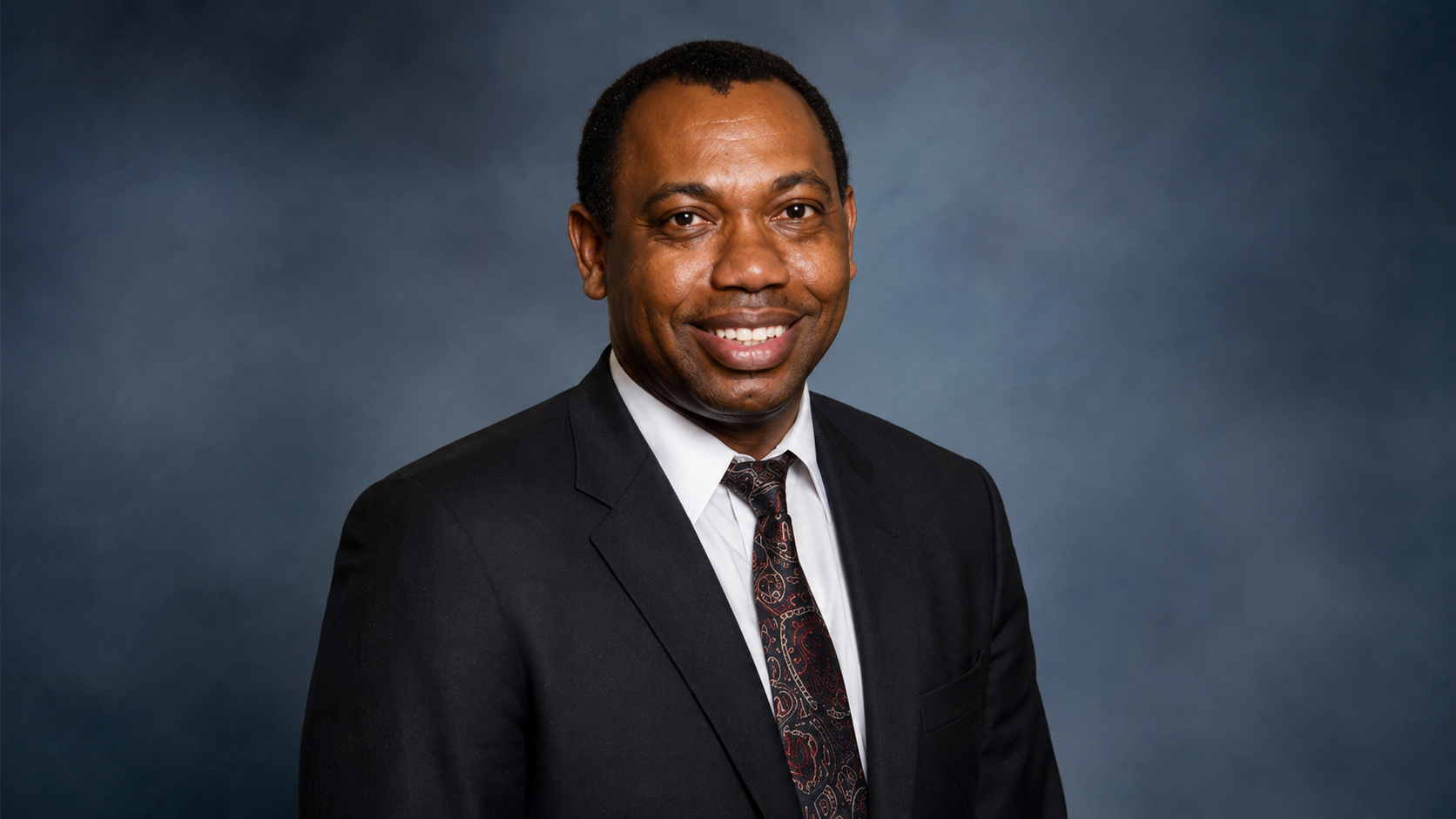
Dr. James Davenport early 70s Virginia State University

Virginia State University ranked 11th in the nation amongst HBCUs
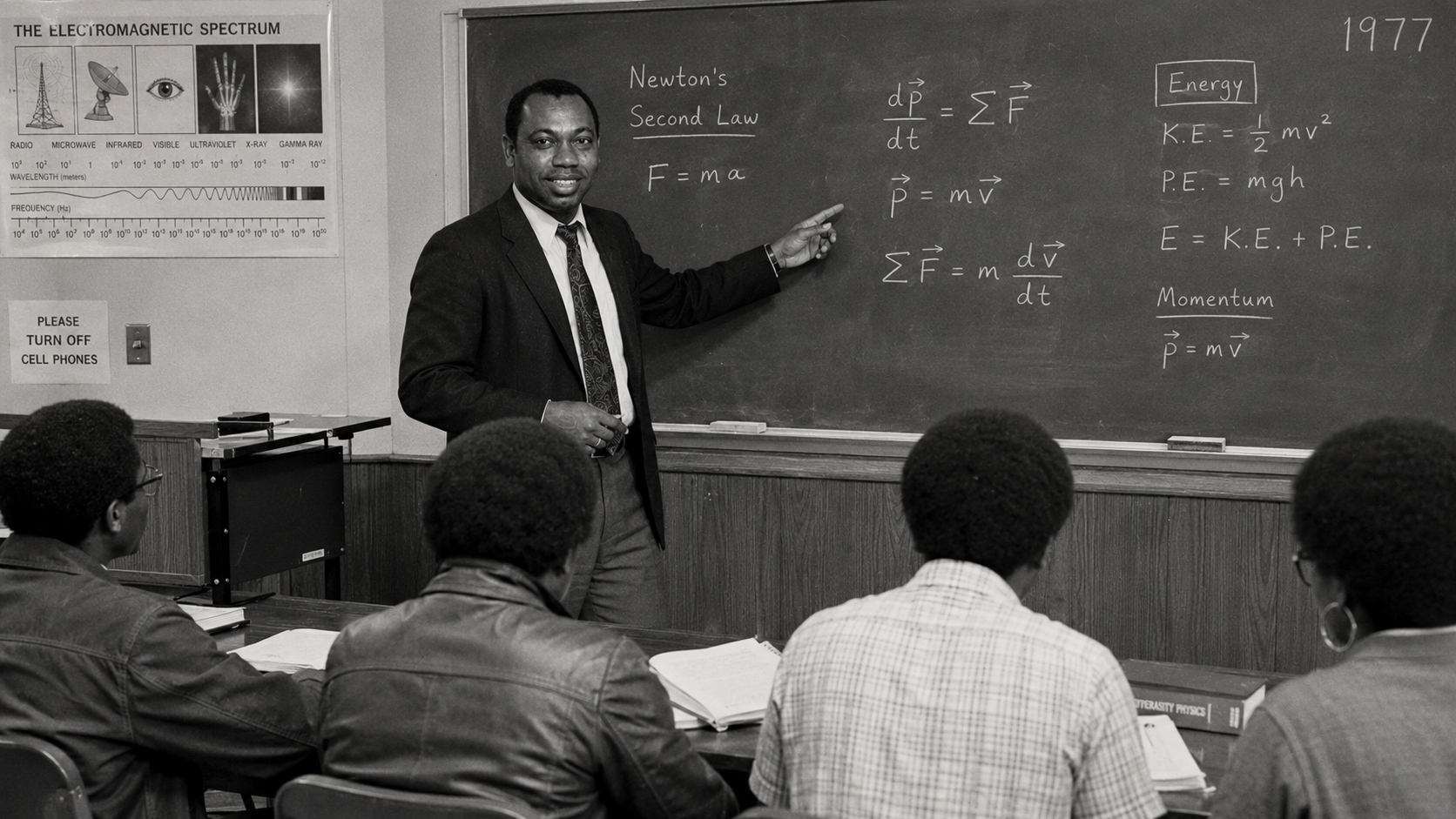
Dr. James Davenport teaching physics in the early 70s at Virginia State University
Dr. James Davenport and the Century-Long Legacy of VSU’s Former Physics Department
Building on the pioneering achievements of Dr. Herman Branson and Dr. James H. Stith, Davenport spent more than four decades teaching, mentoring, and advancing physics education while shaping generations of scientists.
A SCHOLAR ROOTED IN VSU'S MISSION
Dr. Davenport joined Virginia State University in 1967, arriving at a moment when physics programs at historically Black colleges and universities were fighting for recognition, funding, and visibility.
Reflecting on his early years at VSU, Davenport notes, “I came to VSU because of its commitment and success in producing highly qualified and skillful physics majors.”
At VSU, Dr. Davenport championed undergraduate research long before it became a national trend. He insisted that students deserved access to the same high-level scientific inquiry found at major research institutions. Many of his former students entered doctoral programs, national laboratories, and military academies, continuing a tradition of excellence that stretches back nearly a century.
THE HISTORY OF PHYSICS AT VIRGINIA STATE UNIVERSITY
The Physics Department at Virginia State University was established in 1925, when the institution, then known as the Virginia Normal and Industrial Institute, expanded its science curriculum. Under the leadership of Dr. John M. Hunter, who became the third African American to ever earn a Ph.D. in physics from Cornell University in 1937, the department developed a reputation for academic excellence and became one of the nation’s leading training grounds for Black physicists.
That legacy continued through generations of distinguished faculty and alumni, including Dr. Herman Branson, whose groundbreaking scientific research brought international recognition to both the field of physics and his alma mater. By the mid-twentieth century, Virginia State had earned a national reputation for educating scientists whose contributions advanced research, medicine, education, and national defense.
Dr. HERMAN BRANSON: THE PHYSICIST BEHIND THE ALPHA HELIX
One of Virginia State University’s most distinguished graduates, Dr. Herman Branson earned his bachelor’s degree in physics and mathematics before completing his doctorate at the University of Cincinnati, becoming only the fifth African American in the nation to earn a Ph.D. in physics. In the early 1950s, Branson joined a research team led by future Nobel Prize winner Linus Pauling to investigate protein structure — one of the era’s most significant scientific challenges.
Branson’s mathematical analyses played a pivotal role in identifying the alpha helix, one of the fundamental structural building blocks of proteins. While Pauling received much of the public recognition, historians of science have increasingly acknowledged Branson’s essential contribution to one of the twentieth century’s most influential scientific discoveries.
Davenport frequently highlights Branson’s achievement when speaking to students: “When our students learn about my mentor Herman Branson, they see someone who sat where they sit now—and went on to help unlock the structure of life itself. That’s the kind of legacy that inspires real ambition.”
DR. JAMES STITH: BREAKING BARRIERS AT WEST POINT
Another towering figure in VSU’s physics lineage is Dr. James H. Stith, whose career combined scientific excellence with institutional transformation. After graduating from Virginia State, Stith earned his doctorate and became the first Black tenured professor at the United States Military Academy at West Point.
His work in physics education — particularly his advocacy for inclusive teaching practices—earned him national recognition and leadership roles within the American Institute of Physics and the American Association of Physics Teachers.
Dr. Davenport sees Stith’s career as a model of both excellence and courage. “He didn’t just break barriers; he built pathways. His success showed the nation what VSU-trained physicists could do at the highest levels.”
A LEGACY CELEBRATED BY UNIVERITY LEADERSHIP
Virginia State University President Dr. Makola M. Abdullah reflected on the university’s historic physics program and its enduring impact:
“At VSU, we take immense pride in the history of our physics program — built by pioneering scientists who refused to be constrained by the barriers of their time. Herman Branson helped elucidate the alpha helix, one of the fundamental protein structures, thereby advancing molecular biology. James Stith broke barriers at West Point and became a national leader in physics education and in science. Their achievements reflect more than a century of excellence at our institution.”
He continued: “And Dr. James Davenport carries that legacy forward. His national leadership in physics education embodies the very best of VSU. He represents the tradition of innovation, resilience, and intellectual courage that defines this university.”
DR. DAVENPORT'S NATIONAL IMPACT
Dr. Davenport’s work has focused on broadening participation in STEM, improving physics education, and strengthening the pipeline of Black scientists entering graduate programs and research careers. He has collaborated with national organizations, contributed to federal STEM initiatives, and served as a bridge between HBCUs and major research institutions.
One of his most influential contributions has been his leadership in physics education reform, particularly efforts to modernize curricula and integrate computational tools into undergraduate instruction.
As he explains, “Physics is not just equations on a board. It’s a way of thinking—a disciplined curiosity. When students learn that, they can take it anywhere.”
CONTINUING THE TRADITION
The story of Dr. James Davenport is inseparable from the story of physics at Virginia State University. From Herman Branson’s pioneering work on the alpha-helix structure of proteins to James Stith’s groundbreaking tenure at West Point, VSU has produced scientists whose work changed the world.
“As a co-founder of the Black Physics Society, Dr. Davenport’s career represents the continuation of that legacy—a testament to the power of mentorship, the importance of access, and the enduring impact of historically Black institutions on American science,” President Abdullah added.
Reflecting on the future of the program he helped shape, Dr. Davenport surmises, “Our history is extraordinary, but our future is even more promising. The next Branson, the next Stith, the next great physicist might be sitting in a VSU classroom right now.”
Jesse Vaughan
Vaughan Creative Partnters, LLC
jesse@vaughancreativepartners.com
Visit us on social media:
LinkedIn
Facebook
YouTube
Other
Legal Disclaimer:
EIN Presswire provides this news content "as is" without warranty of any kind. We do not accept any responsibility or liability for the accuracy, content, images, videos, licenses, completeness, legality, or reliability of the information contained in this article. If you have any complaints or copyright issues related to this article, kindly contact the author above.
