
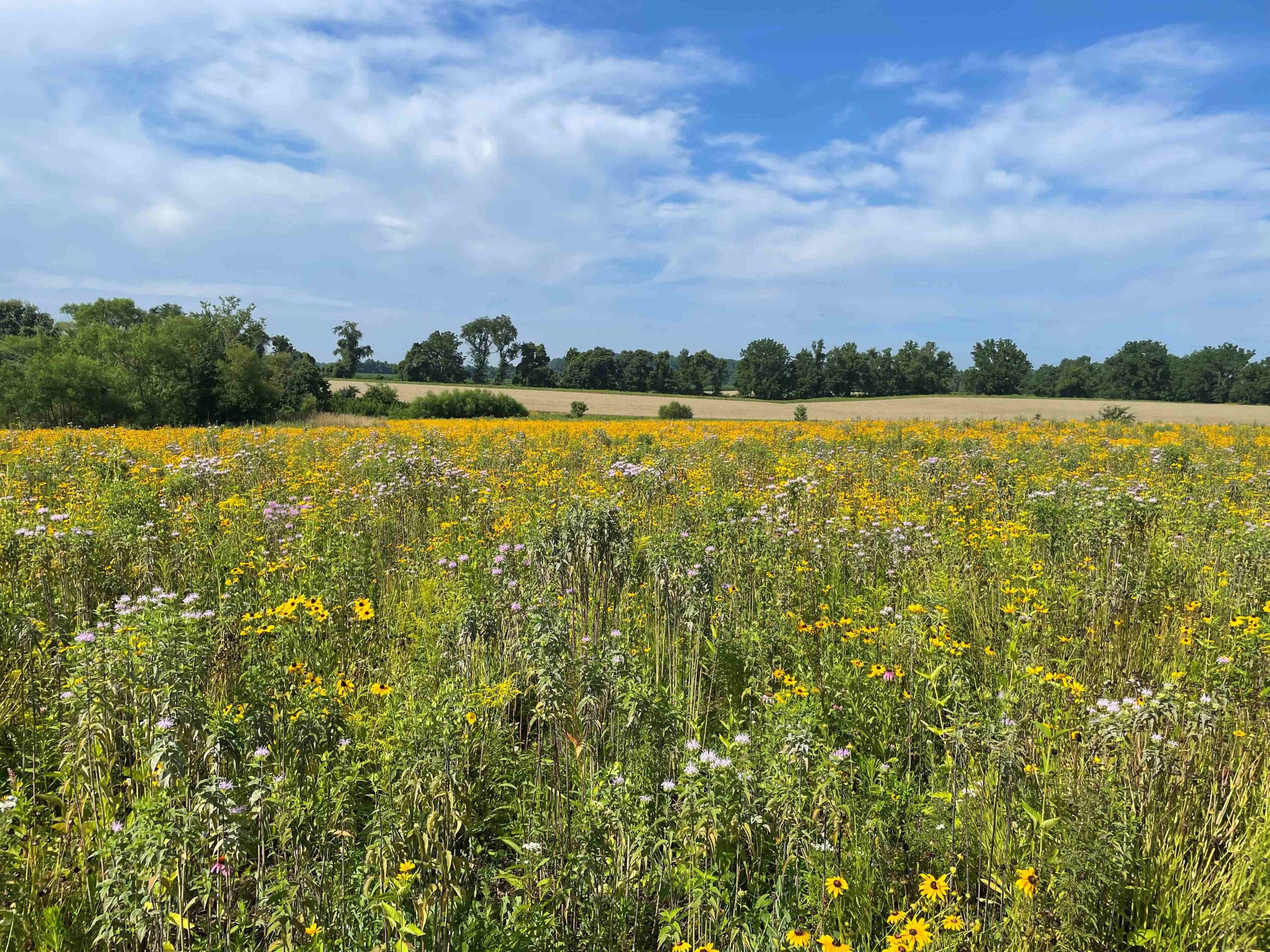
Natural Lands Project. Photo Courtesy of Dan Small
Governor Wes Moore today announced the Maryland Department of Natural Resources is awarding $31.5 million in grants from the Chesapeake and Atlantic Coastal Bays Trust Fund for 25 ecological restoration projects encompassing 188 sites throughout the state that will improve water quality and wildlife habitats.
“The Chesapeake Bay is the centerpiece of our tourism and seafood industries in Maryland,” said Governor Moore. “It’s a key part of our cultural identity and the place where countless family memories are made. These new investments represent our commitment to continuing to improve the Bay, its surrounding watershed, and the rivers and streams that connect our communities.”
The Fiscal Year 2027 environmental restoration projects were selected based on their ability to improve water quality and provide other benefits such as resilience to climate impacts, habitat enhancement, and environmental justice. DNR estimates the projects will reduce about 45,100 pounds of nitrogen, 6,400 pounds of phosphorus, and nearly 8,900 tons of sediment each year. In waterways, nitrogen and phosphorus fuel algae blooms that cloud the water and reduce dissolved oxygen when they die off, making it difficult for marine life to thrive.
Administrators of the Chesapeake and Atlantic Coastal Bays Trust Fund use the latest science and data to determine the most cost-efficient and effective non-point source pollution reduction projects. DNR selected the recipients from applications for outcome-based funding through the department’s online Grants Gateway.
“Strong partnerships are key to making significant progress on reducing Chesapeake Bay pollutants,” said Maryland Secretary of Natural Resources Josh Kurtz. “The Chesapeake and Atlantic Coastal Bay Trust Fund grants enable DNR to work directly with community organizations, local governments, and scientific experts to complete projects that will result in lasting improvements to the Coastal Bays, the Chesapeake Bay, and their watersheds throughout Maryland.”
This year’s suite of projects include plans to plant 1,054 acres of trees, restore 55 acres of wetlands, implement 32,000 linear feet of stream restoration, install or retrofit 11 stormwater reduction practices, add 40 rain gardens in communities, create 2,165 linear feet of living shoreline, reduce agricultural runoff, and treat 960 impervious acres to reduce stormwater runoff in counties. Taken together the projects will deliver numerous ecological, social and economic benefits across 16 counties and Baltimore City within the state.
These investments are a part of Governor Moore’s continued dedication to land conservation. In December, Gov. Moore along with leaders of six other Chesapeake Bay watershed states, the Mayor of Washington, D.C., and federal representatives signed a revised Chesapeake Bay Watershed Agreement to continue the regional cleanup effort. The revised agreement includes new goals for water quality, wildlife, and protected lands for states to reach by 2040.
Since 1985, Maryland’s Chesapeake Bay cleanup efforts have reduced about 40 million pounds of nitrogen, 4.6 million pounds of phosphorus and about 1 billion pounds of sediment–enabling the state to meet or nearly meet all of its 2025 Chesapeake Bay pollution reduction targets.
The work to reduce these Bay pollutants is important for protecting Maryland’s $32.3 billion tourism economy, $10.6 billion outdoor recreation economy, and $600 million seafood industry.
Last year, the Department of Natural Resources in partnership with nonprofit organizations, the University of Maryland Center for Environmental Science, and thousands of volunteers completed a decade-long effort to restore oyster habitat and add billions of new oysters to five different Chesapeake Bay tributaries in Maryland.
Maryland is innovating with its Chesapeake Bay protection efforts. In January, the Department of Natural Resources announced $11.2 million in funding for 37 ecological improvement projects through the new Whole Watershed Program, which will focus different pollution reduction projects in five specific watersheds–Antietam Creek in Western Maryland, Baltimore Harbor, Newport Bay near Ocean City, the Severn River near Annapolis, and the Upper Choptank River on the Eastern Shore. Maryland state agencies have also helped plant more than 1.5 million trees across the state as part of the 5 Million Trees Planting effort. These new trees help filter pollutants, clean the air, and provide new wildlife habitat.
Chesapeake Bay Improvement Project highlights for FY2027 include:
- Baltimore Tree Trust will remove impervious (paved) surfaces to create 900 new tree wells within Baltimore City. Urban trees will be planted to help increase canopy coverage, lower temperatures from urban heat island effect, and improve water quality. All sites occur in overburdened and underresourced communities with high climate vulnerability.
- Bowie State University will transform an existing dry pond on its campus into a wet pond to improve water quality for the untreated impervious area within the pond’s drainage area. The retrofit will serve as a showcase project visible to all students.
- The City of Frederick will restore 7,580 linear feet of the Carroll Creek watershed and plant 24,000 trees resulting in water quality and flooding improvements as well as a passive park for recreation.
- Eastern Shore Land Conservancy will reclaim a degraded industrial site in St. Michaels along the Choptank River and transform it into a vibrant public conservation park that reconnects the community to the waterfront that will include 2 acres of pollinator meadow, 1.53 acres of wetland enhancement and creation, and 0.33 acres of tree and shrub plantings.
- Gunpowder Valley Conservancy will restore riparian buffers and upland forests within the Gunpowder watershed by planting a total of 5,400 trees on 48.25 acres and treat a drainage area of 6.14 acres by installing 32 residential rain gardens, 9 institutional rain gardens, and 4 microbioretention practices on properties within the Gunpowder watershed.
- SilvoCulture will plant 8,100 trees on 27 acres across two private farm sites in Middletown and Myersville, providing long-term sources of nutritious food, wildlife habitat, water quality improvement, and ecological services including outreach and education programming.
Dollar amounts for each project will be available later this year when the contracts are completed. DNR Watershed and Climate Services staff will continue to provide technical assistance to these designated recipients as the projects are finalized.
The complete list and location of funded projects can be found on the DNR webpage for the FY27 Chesapeake and Atlantic Coastal Bays Trust Fund. Beginning in mid-July, the Department of Natural Resources will accept applications for the next fiscal year through the department’s online Grants Gateway.
