

Common drug residues trigger synaptic damage in fish brains
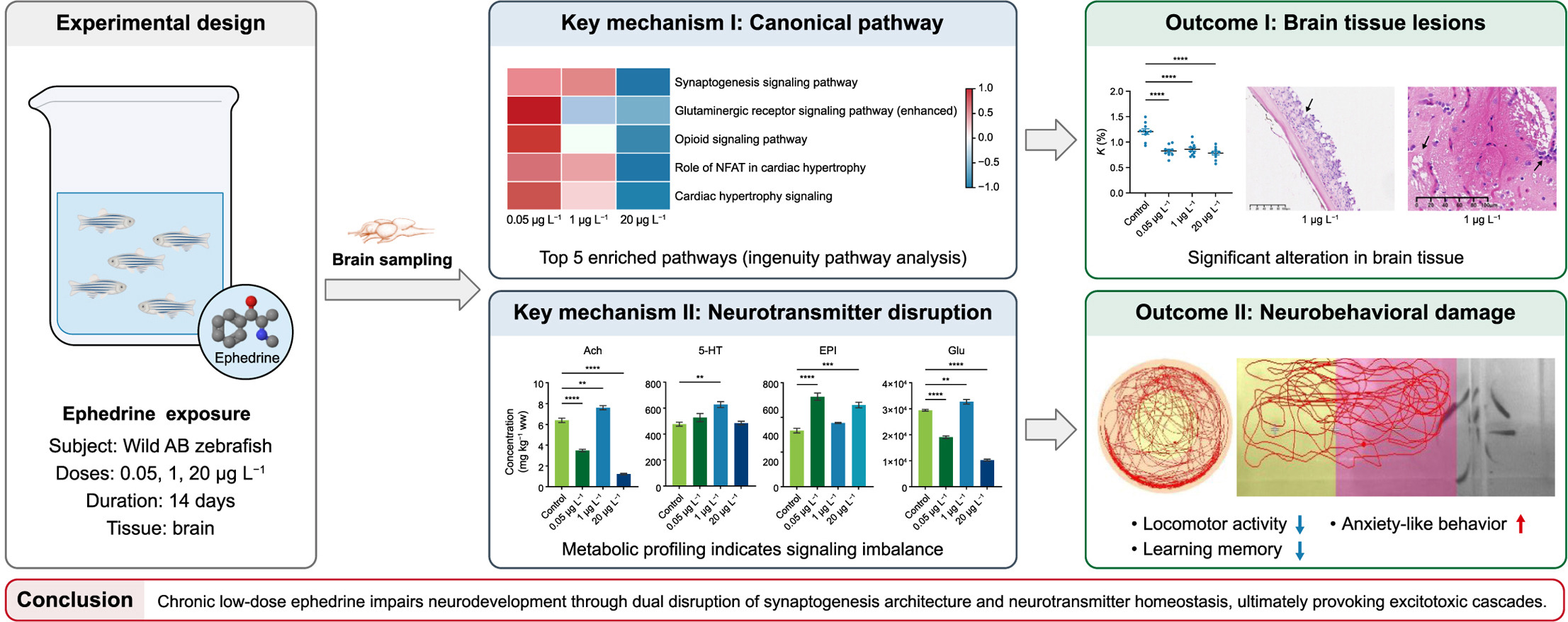
Low-dose ephedrine disrupts synaptic signaling and behavior in adult zebrafish.
GA, UNITED STATES, February 11, 2026 /EINPresswire.com/ -- Pharmaceutical residues in aquatic environments are increasingly recognized as hidden neurotoxic threats. New research reveals that chronic exposure to environmentally relevant levels of ephedrine—a widely used stimulant precursor—can disrupt brain development and behavior in adult fish. Using an integrated multi-level approach, the study shows that even low concentrations of ephedrine interfere with synapse formation and neurotransmitter balance in the brain. These molecular and cellular disruptions translate into measurable behavioral changes, including altered locomotion, increased anxiety-like responses, and impaired learning. The findings highlight that low-dose, long-term exposure to drug contaminants may compromise neural circuit integrity in aquatic organisms, raising concerns about the broader ecological risks of pharmaceutical pollution.
Ephedrine is commonly used in medicine and is a key precursor in the synthesis of amphetamine-type stimulants. After use, unmetabolized ephedrine enters wastewater systems and has been increasingly detected in rivers and surface waters worldwide. Although high-dose neurotoxicity of ephedrine is well documented in humans and mammals, its effects at environmentally realistic concentrations remain poorly understood. Aquatic organisms are continuously exposed to such residues, often throughout their lifespan. Previous studies have shown that stimulant drugs can alter early neurodevelopment in fish, but the long-term consequences for adult brain function and behavior are unclear. Based on these challenges, it is necessary to conduct in-depth research to clarify how low-level ephedrine exposure affects neural systems in aquatic species.
Researchers from the Chinese Research Academy of Environmental Sciences and collaborating institutions report that chronic exposure to low concentrations of ephedrine causes significant neurobiological and behavioral changes in adult zebrafish. The study, accepted on January 30, 2026, and published in Environmental Science and Ecotechnology, combines transcriptomic profiling, neurochemical analysis, histopathology, and behavioral testing to uncover how ephedrine disrupts brain signaling pathways. The findings provide mechanistic evidence that common pharmaceutical contaminants can impair synaptic architecture and neurotransmitter homeostasis, even at concentrations commonly detected in aquatic environments.
To uncover the neurotoxic effects of ephedrine, the researchers exposed adult zebrafish to environmentally relevant concentrations for 14 days and examined changes across molecular, cellular, and behavioral levels. Transcriptomic analyses revealed thousands of differentially expressed genes in the brain, with synaptogenesis signaling emerging as the most significantly disrupted pathway—even at the lowest exposure level. Genes involved in synaptic vesicle cycling, neurotransmitter release, and neuronal connectivity showed consistent dysregulation.
Histological examination confirmed these molecular signals, revealing structural damage in key brain regions associated with learning and sensory processing. These included neuronal vacuolization, synaptic vesicle depletion, and abnormal remodeling of the postsynaptic density, indicating impaired synaptic integrity.
Targeted neurochemical profiling further demonstrated widespread imbalance across multiple neurotransmitter systems. Levels of dopamine, serotonin, acetylcholine, glutamate, and GABA showed dose-dependent and biphasic responses, reflecting disrupted excitatory–inhibitory balance. Molecular docking analyses supported these findings, showing strong binding affinity between ephedrine and key neurotransmitter-related proteins, suggesting direct interference with synaptic signaling.
Behavioral assays linked these molecular disturbances to functional outcomes. Exposed fish displayed increased locomotor activity, heightened anxiety-like behavior, and altered learning performance, demonstrating that synaptic and neurochemical disruptions translated into measurable changes in brain function.
"This study shows that ephedrine does not need to reach high concentrations to interfere with brain function," said the corresponding author. "By simultaneously disrupting synapse formation and neurotransmitter balance, low-dose exposure can destabilize neural circuits that regulate behavior. What is particularly concerning is that these effects occur at concentrations already detected in real aquatic environments. Our findings suggest that pharmaceutical residues may pose underestimated risks to wildlife by subtly but persistently altering nervous system function."
These findings have important implications for environmental monitoring and chemical risk assessment. They demonstrate that traditional toxicity tests based on mortality or high-dose exposure may overlook subtle but biologically meaningful neurotoxic effects. The study highlights synaptogenesis signaling and neurotransmitter homeostasis as sensitive targets for assessing pharmaceutical pollution. From an ecological perspective, disrupted behavior in fish—such as altered anxiety or learning—may affect survival, predator avoidance, and reproductive success. More broadly, the work underscores the need for stricter regulation and improved wastewater treatment strategies to limit the release of neuroactive pharmaceutical residues into aquatic ecosystems, helping to protect both biodiversity and ecosystem stability.
References
DOI
10.1016/j.ese.2026.100661
Original Source URL
https://doi.org/10.1016/j.ese.2026.100661
Funding information
This work was funded by the National Science Fund for Distinguished Young Scholars (42325706) and the National Natural Science Foundation of China (42177382, 42307366).
Lucy Wang
BioDesign Research
email us here
Legal Disclaimer:
EIN Presswire provides this news content "as is" without warranty of any kind. We do not accept any responsibility or liability for the accuracy, content, images, videos, licenses, completeness, legality, or reliability of the information contained in this article. If you have any complaints or copyright issues related to this article, kindly contact the author above.
